Rsquared Academy · Open Courses

Open Courses

Free, self-paced R courses — no sign-up, no platform, just the contents.

Welcome to Rsquared Academy open courses. Here you’ll find the complete content of all our self-paced courses: videos, guides, e-book chapters, slides and code. We built this for everyone who would rather not sign up on a platform to access course material. Feedback is always welcome — reach out at support@rsquaredacademy.com.

  • 15 courses
  • 5 tracks
  • Beginner → Advanced
  • Free & open
  • No sign-up

Start with Intro to R Browse courses

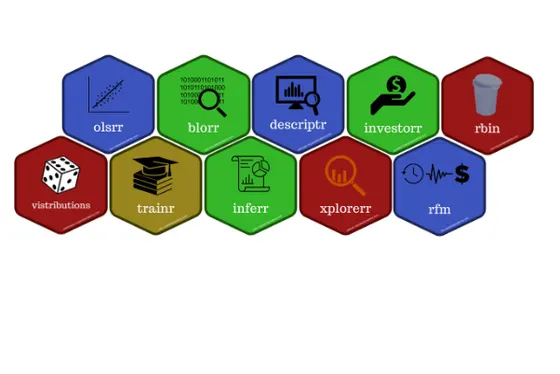
Hex stickers of Rsquared Academy R packages

Learning path

Follow the tracks in order, or jump in wherever your current project needs. Each card below links to every format of that course.

01

Foundations

The R ecosystem and IDE, then importing flat files and Excel workbooks.

02

Wrangling

dplyr in three parts, tibbles, pipes and date & time handling.

03

Text & Web

Regular expressions first, then put them to work scraping the web.

04

Applied Analytics

RFM segmentation, market basket analysis and database workflows.

Comfortable with R already? Jump straight to 02 Wrangling. Command Line Basics is a companion that pairs well with any track.

Courses

Course thumbnail: Introduction to R

FoundationsBeginner

Introduction to R

In this introductory course, you will learn about R and its ecosystem. You will learn about the evolution of R, its current capabilities and the organizations working for the development of R. You will be introduced to RStudio, a very popular IDE, the R community, and tidyverse, a collection of R packages designed for data science.

What’s inside
  • R ecosystem and its evolution
  • RStudio, the popular IDE for R
  • The R community
  • tidyverse overview

Online course YouTube playlist Blog: Variables in R Blog: Data Types in R Blog: Getting Help in R Blog: R Package Ecosystem eBook Slides: Introduction Slides: Getting Help Slides: Packages Slides: Variables GitHub

Course thumbnail: Import Data into R

FoundationsBeginner

Import Data into R

Importing or reading data is one of the most basic and crucial stages of data analysis. In this introductory course, you will learn to read data into R from different sources and in multiple formats. You will examine the challenges in reading data and use appropriate methods to address them.

What’s inside
  • Reading data from different sources
  • Multiple data formats
  • Common import challenges and fixes

Online course YouTube playlist Blog: Import Data into R eBook chapter Slides: Import Data Part 1 GitHub

Course thumbnail: Import Excel Data into R

FoundationsBeginner

Import Excel Data into R

Importing or reading data is one of the most basic and crucial stages of data analysis. In this introductory course, you will learn to read Excel data into R. You will examine the challenges in reading Excel data and use appropriate methods to address them.

What’s inside
  • Reading Excel workbooks
  • Sheet and range handling
  • Common Excel import challenges and fixes

Online course YouTube video Blog: Import Excel Data into R eBook chapter Slides: Import Data Part 2 GitHub

Course thumbnail: Data Wrangling with dplyr Part II

WranglingIntermediate

Data Wrangling with dplyr - Part II

In this course, you will learn to join tables using dplyr's two table verbs. Data does not come in the structure or shape in which we need it for analysis and a lot of time is spent in getting the data into shape. You will learn the best ways to combine split data sets to create single tables for your data analysis pipeline.

What’s inside
  • dplyr's two-table verbs
  • Join types in practice
  • Combining split data sets

Online course YouTube video Blog: Data Wrangling Part 2 eBook chapter Slides: dplyr Part 2 GitHub

Course thumbnail: Data Wrangling with dplyr Part III

WranglingIntermediate

Data Wrangling with dplyr - Part III

Data does not come in the structure or shape in which we need it for analysis and a lot of time is spent in getting the data into shape. As such reshaping data is an invaluable skill set for a data scientist. In this course, you will master sophisticated techniques for data manipulation using the dplyr package.

What’s inside
  • Reshaping data
  • Advanced manipulation techniques
  • Sophisticated dplyr workflows

Online course YouTube video Blog: Data Wrangling Part 3 eBook chapter Slides: dplyr Part 3 GitHub

Course thumbnail: Readable Code with Pipes

WranglingBeginner

Readable Code with Pipes

R code contains a lot of parentheses in case of a sequence of multiple operations. When you are dealing with complex code, it results in nested function calls which are hard to read and maintain. The magrittr package by Stefan Milton Bache provides pipes enabling us to write R code that is readable.

What’s inside
  • The magrittr pipe operator
  • Rewriting nested calls
  • Readable code sequences

Online course YouTube video Blog: Readable Code with Pipes eBook chapter Slides: pipes GitHub

Course thumbnail: Handling Date & Time in R

WranglingIntermediate

Handling Date & Time in R

This course is designed to give you a comprehensive introduction to handling date and time data in R. If you are someone who deals with data, you would know that date/time come in all possible weird formats. As such, it is important to know how to parse, manipulate and compute with date and time.

What’s inside
  • Parsing date and time values
  • Components and arithmetic
  • Time zones with lubridate

Online course YouTube playlist Blog: Handling Date & Time in R eBook chapter Slides: Date & Time GitHub Posit Cloud lab

Course thumbnail: Regular Expressions in R

Text & WebIntermediate

Regular Expressions in R

In this course, we will learn about using regular expressions in R. While it is aimed at absolute beginners, we hope experienced users will find it useful as well. The post is broadly divided into three sections. In the first section, we will introduce the pattern matching functions such as grep, grepl etc. as we will be using them in the rest of the post.

What’s inside
  • Pattern matching syntax
  • grep and grepl family of functions
  • Substitution and extraction

Blog: Regular Expressions in R Slides: Regular Expressions GitHub Posit Cloud lab

Course thumbnail: Practical Introduction to Webscraping in R

Text & WebAdvanced

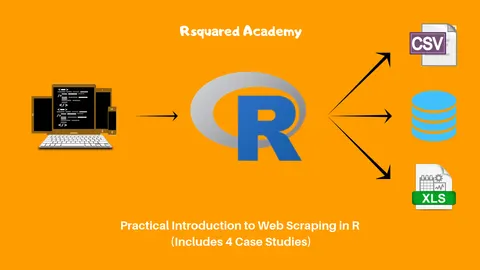
Practical Introduction to Webscraping in R

Are you trying to compare prices of products across websites? Are you trying to monitor price changes every hour? Or planning to do some text mining or sentiment analysis on reviews of products or services? If yes, how would you do that? In this course, we will learn about web scraping using R.

What’s inside
  • How web scraping works
  • Extracting data from web pages
  • Text mining and sentiment analysis uses

YouTube video Blog: Web Scraping Slides: Web Scraping GitHub

Course thumbnail: Customer Segmentation using RFM Analysis

Applied AnalyticsIntermediate

Customer Segmentation using RFM Analysis

In this course, students will learn to segment customers using recency, frequency and monetary value analysis. Students will look at a case study to understand how RFM can be used to segment customers and tailor offers to them. They will understand the difference between transaction level data and customer level data.

What’s inside
  • Recency, frequency, monetary value
  • Transaction vs customer level data
  • Segmenting customers

Online course YouTube video Blog: RFM Analysis Slides: RFM Analysis GitHub Posit Cloud lab

Course thumbnail: Working with Databases using R

Applied AnalyticsIntermediate

Working with Databases using R

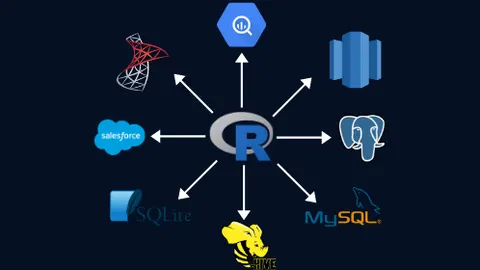
In this course, you will learn to interact with databases from R. From connecting to different databases from R, using SQL script in RStudio and the SQL engine in knitr while working with RMarkdown documents to querying, visualizing and modeling data while securely handling database credentials.

What’s inside
  • Connecting to databases from R
  • SQL in RStudio and knitr
  • Querying, visualizing and modeling
  • Handling credentials securely

Online course YouTube video Blog: Working with Databases eBook Slides: Databases & SQL GitHub Posit Cloud lab

Course thumbnail: Command Line Basics

ToolingBeginner

Command Line Basics

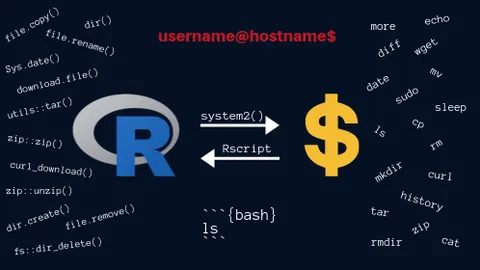
In this course, you will be introduced to shell commands. Our goal was to ensure that after completing this tutorial, readers should be able to use the shell for version control, managing cloud services (like deploying your own shiny server etc.), execute commands in R and RMarkdown and execute R scripts in the shell.

What’s inside
  • Shell fundamentals
  • Version control and cloud services
  • Running R and R scripts from the shell

Online course YouTube video Blog: Command Line Basics eBook Slides: Shell (PDF) GitHub Posit Cloud lab

Books behind the courses

Every course draws from one of six open-access textbooks, free to read online and downloadable as PDF or ePub.

Feedback

Spotted a mistake, a broken link, or a topic you would like covered next? Everything here is maintained by hand, so a note from you genuinely helps.

Email the team Open an issue